Robots
Historical images of robots, mechanical men, or related to the Karel Capek play, R.U.R.: Rossum's Universal Robots. Collection compiled during research for the article, "Why Do Robots Rebel? The Labor History of a Cultural Icon" doi.org/10.1215/15476715-1899057
Filter by tag
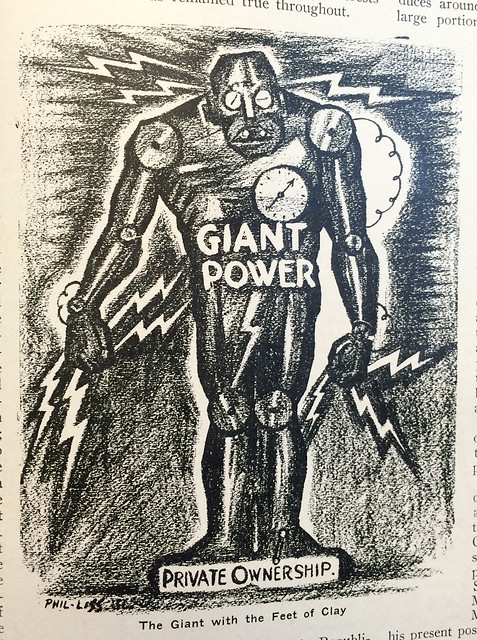
The Giant with the Feet of Clay
Cartoon depicts electric utility companies as a robot with the words "giant power" written on its chest and "private ownership" on its feet. The caption--The Giant with the Feet of Clay--suggests the need for public ownership of utilities. Labor Age, December 1931
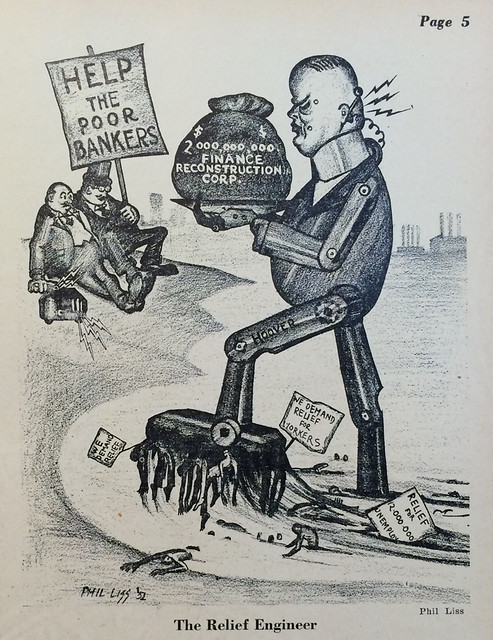
The Relief Engineer
Labor Age, March 1932
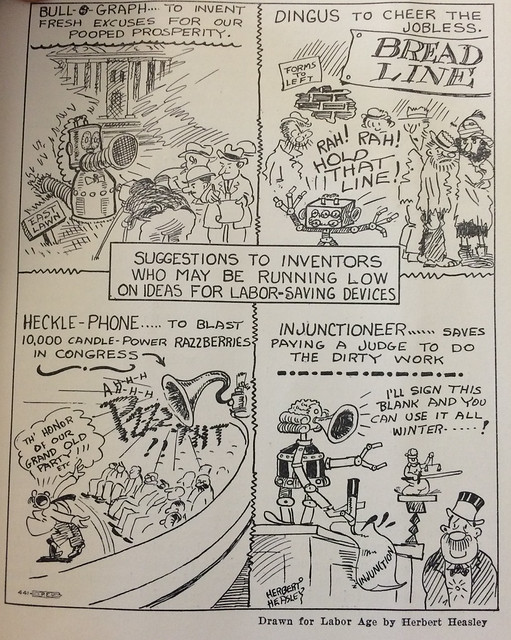
Suggestions to inventors who may be running low of ideas for labor-saving devices
Labor Age, November 1930
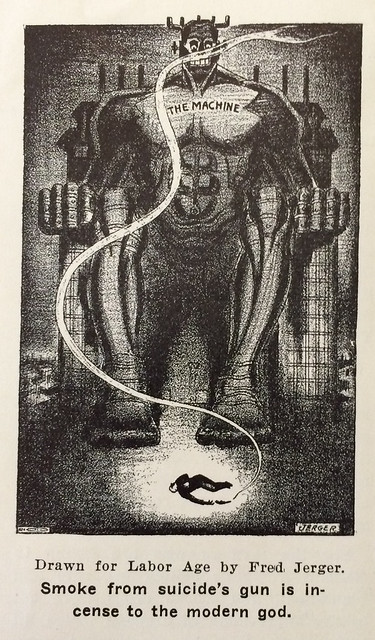
Smoke from suicide's gun is incense to the modern god.
Labor Age, December 1930
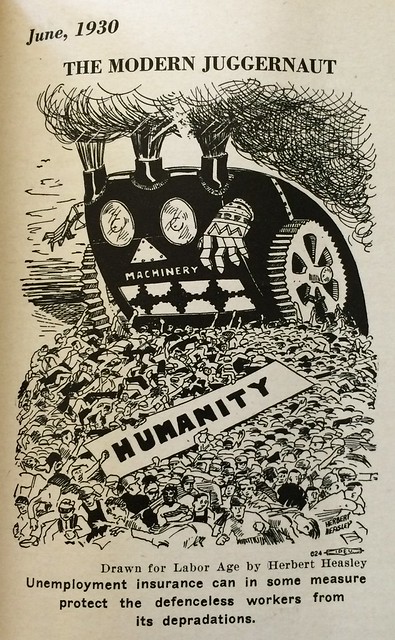
The Modern Juggernaut
Labor Age, June 1930: "Unemployment insurance can in some measure protect the defenceless workers from its depradations."
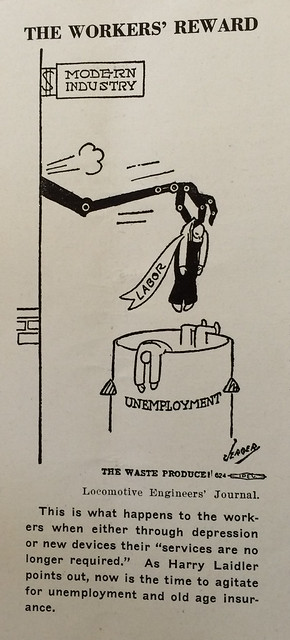
The workers' reward
Labor Age
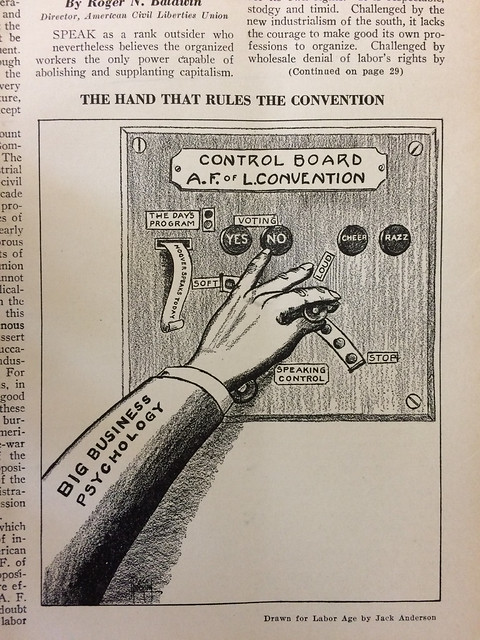
The Hand that Rules the Convention
Labor Age
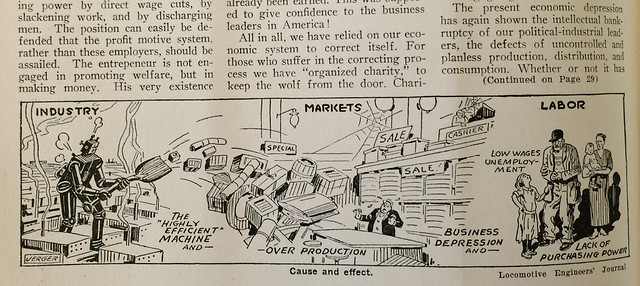
Cause and effect
Labor Age
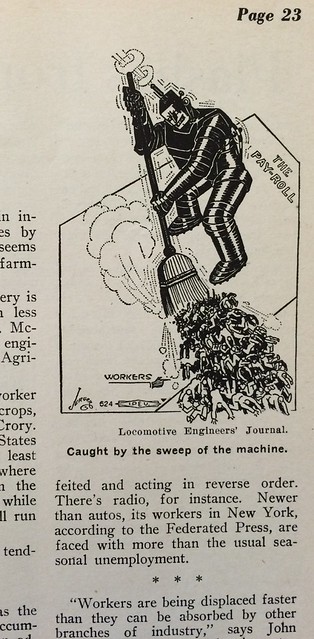
Caught in the Sweep of the Machine
Labor Age, February 1930, p. 23.
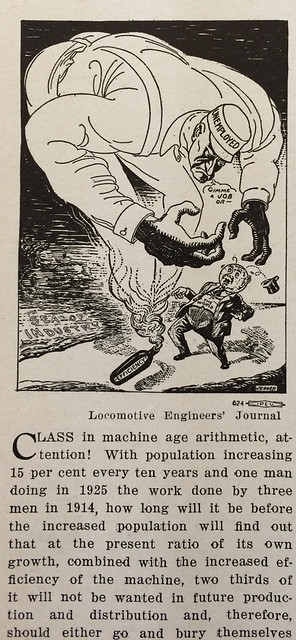
"Gimme a job or..."
Labor Age
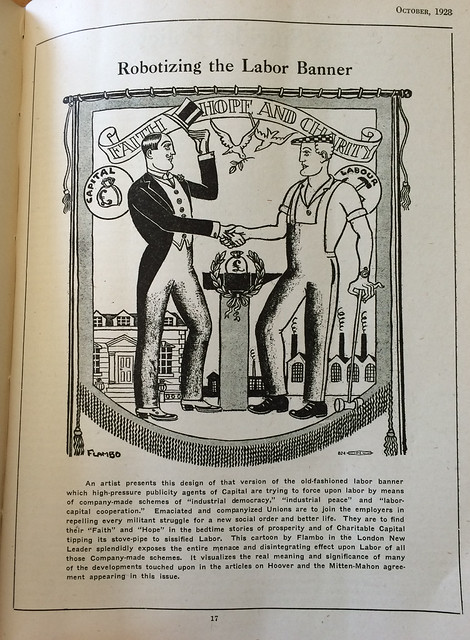
Robotizing Labor's Banner
Commentary on labor-management cooperation, Labor Age, October, 1928
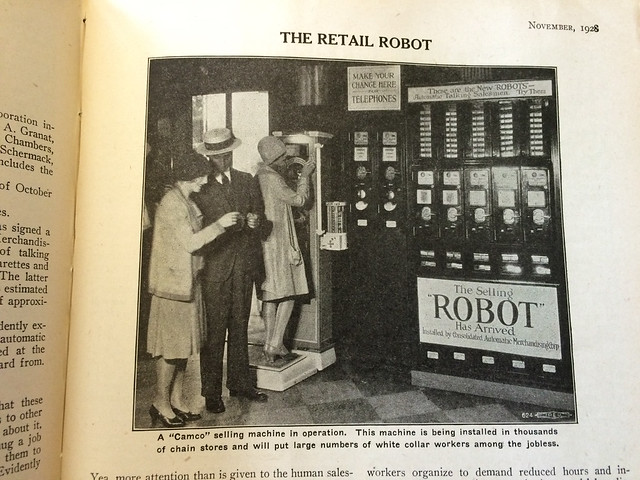
The Retail Robot
The Retail Robot appeared in the November 1928 Labor Age, accompanying an article by Justus Ebert, "Man vs. Machine."
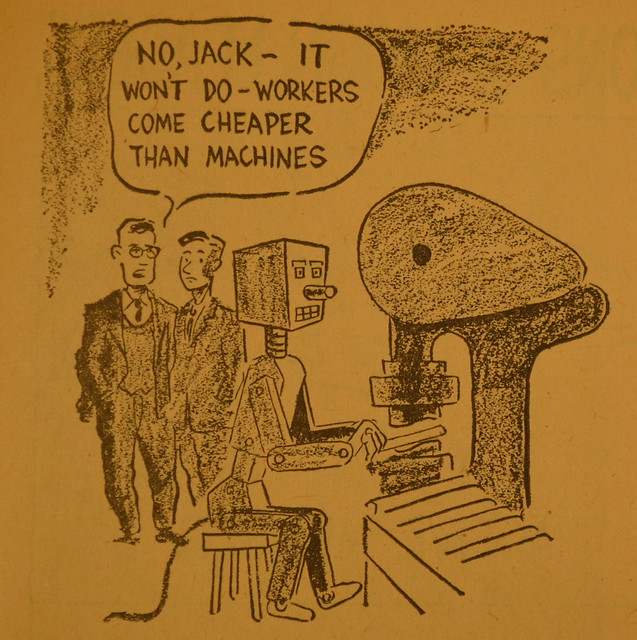
Workers Cheaper than Machines
Two managers observe a new industrial robot working at at a press. "No, Jack--It won't do--Workers come cheaper than machines. From UAW Ammunition (1948).
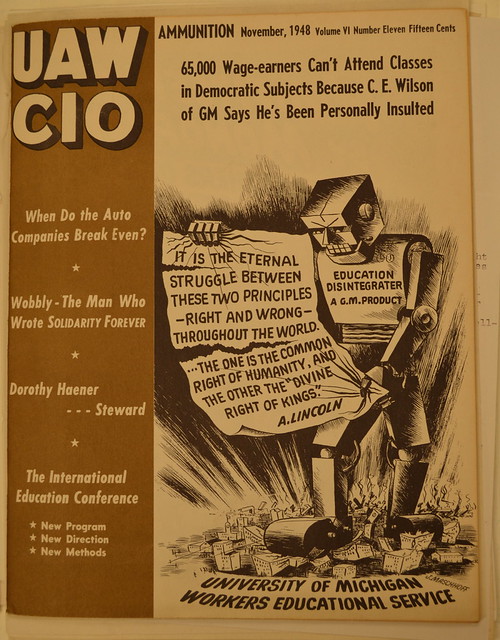
Education Disintegrator: a GM Product
Cover of Ammunition (Nov. 1948) decries the elimination of the University of Michigan Workers Education Service. Supporters charged that the Regents eliminated the program at the insistence of General Motors.
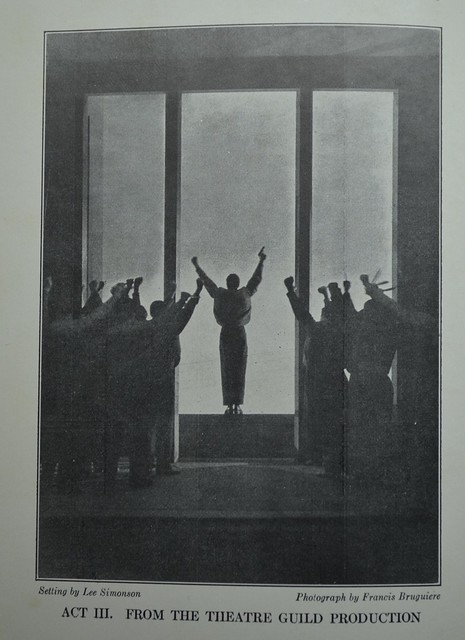
Radius at the window
From the Theatre Guild Library edition of R.U.R. (Rossum's Universal Robots), 1923.
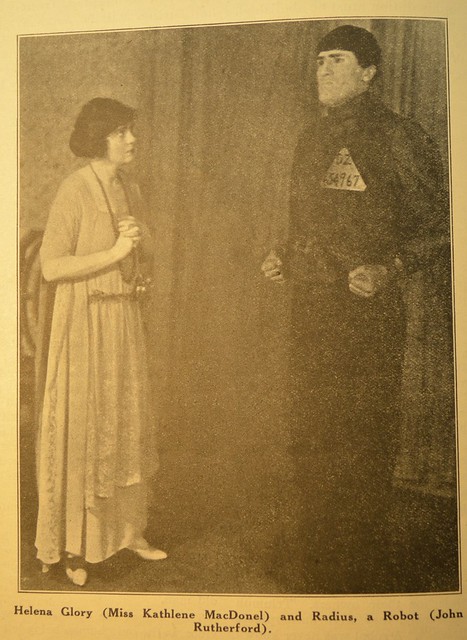
Helena and Radius
Helena Glory (Miss Kathlene MacDonel) and Radius, a Robot (John Rutherford). From The Czechoslovak Review v. 6 (November 1922): 298. From the collection of the Newberry Library. "Somewhere in the second act of 'R.U.R.', these sinister robot creatures, influenced and inebriated by the virulent hootch of civilization take it into their heads to revolt. They have acquired through propinquity and the help of a radical biologist, the hatred, irritability and selfishness of human beings."
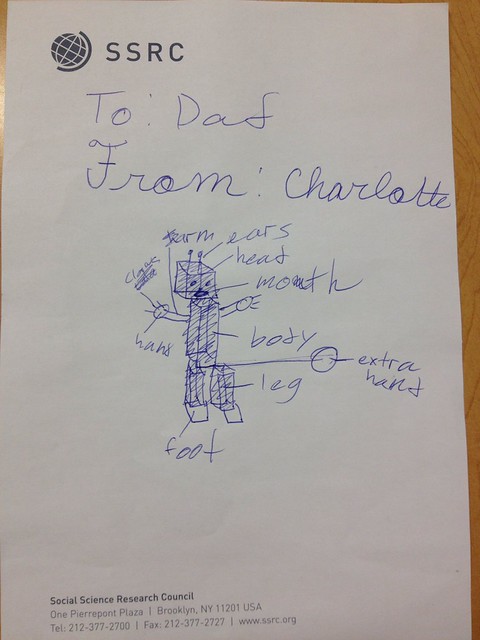
Charlotte's robot
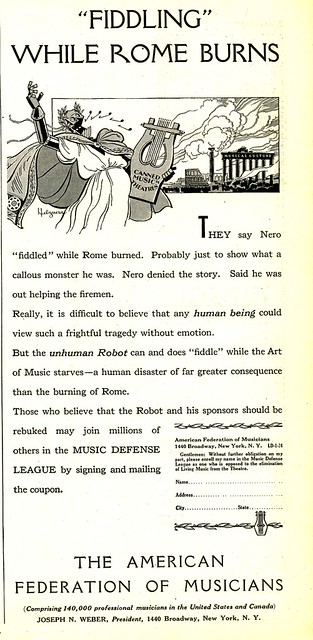
"Fiddling" While Rome Burns
Advertisement by American Federation of Musicians condemning use of automated music in theaters. Literary Digest, vol. 108, January 24, 1931, p. 37.
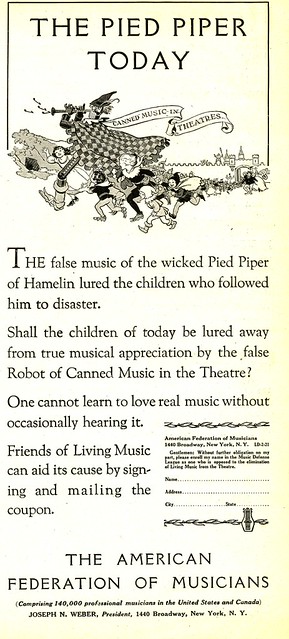
The Pied Piper Today
Advertisement by American Federation of Musicians condemning use of automated music in theaters. Literary Digest, vol. 108, February 21, 1931, p. 41.
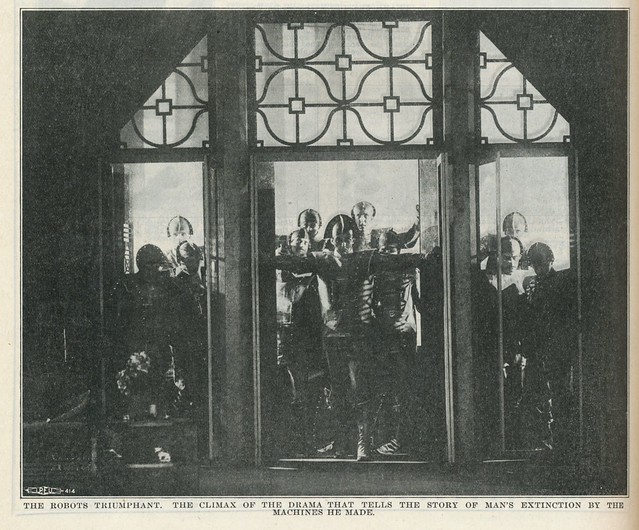
R.U.R. revival, 1930
Journal of Electrical Workers and Operators, December 1929, p. 632.
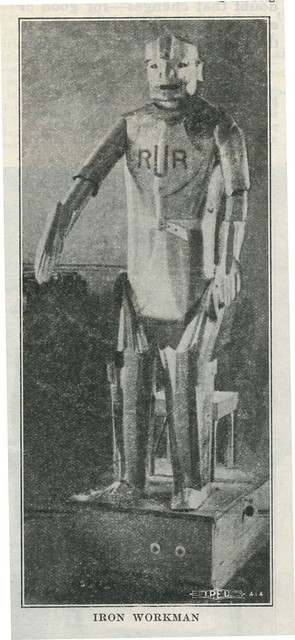
Iron Workman
Journal of Electrical Workers and Operators, April 1929, 177.
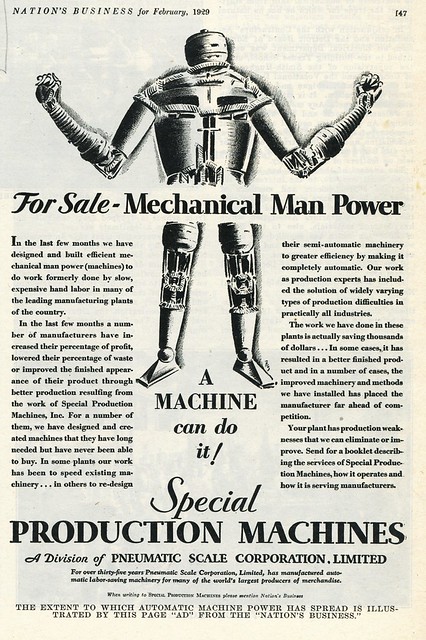
For Sale: Mechanical Manpower
Journal of Electrical Workers and Operators, March 1929, 123. IBEW reprinted this full page ad from Nation's Business alongside articles titled "Now at Last, a Workerless Factory is Initiated," "Thrown out of work by robots," and "List of Automatic Machines Grows Swiftly."
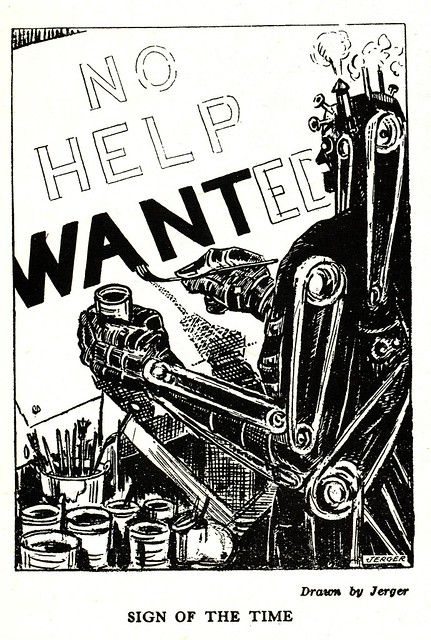
Sign of the Times
Drawn by Jerger, The Unemployed Number 4(1931), p. 18. Published by the League for Industrial Democracy between 1930-1932.
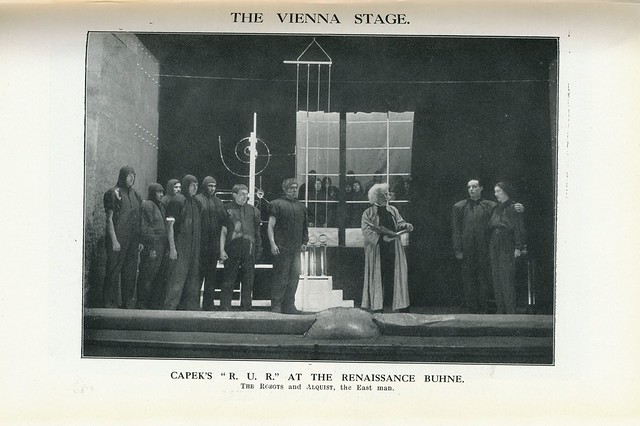
R.U.R. in Vienna, c. 1922-24
Lionel Carson, ed., "The Stage" Year Book, 1921-1925 (London: "The Stage" Offices, n.d. [1925], following p. 40.
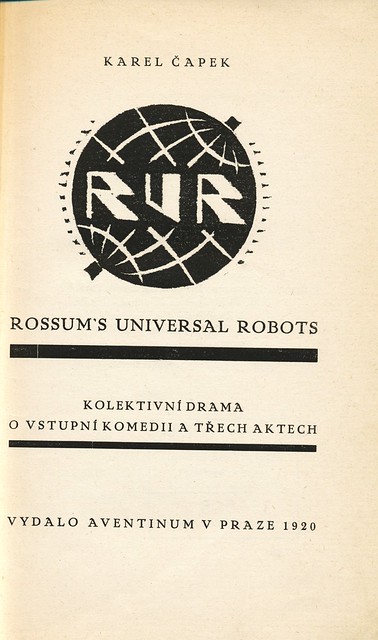
Title Page: R.U.R. (1920)
Title page of early Czech edition, perhaps the first edition.
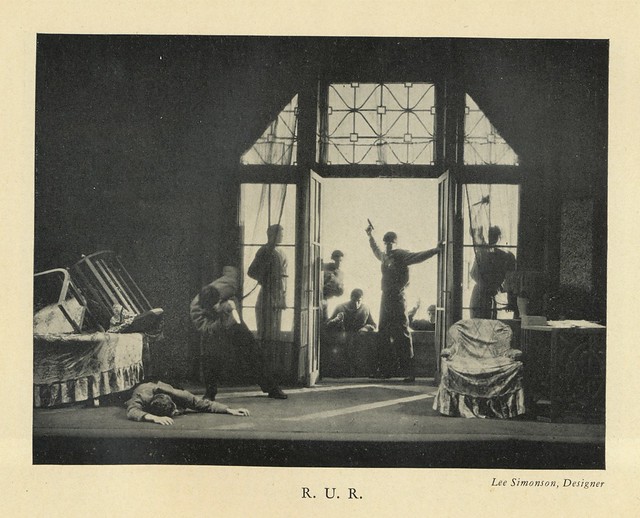
R.U.R. by the Theatre Guild
Dramatic climax of R.U.R.. In Walter Prichard Eaton, The Theatre Guild: The First Ten Years (New York: Brentano's, 1929), p. 113.
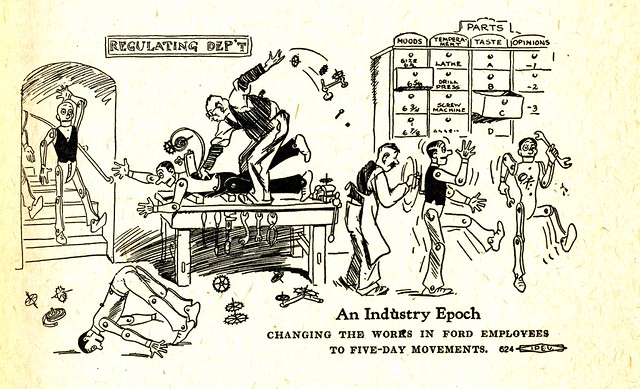
An Industry Epoch
"Changing the Works in Ford Employees to Five-Day Movements." The Labor Age, February 1927, p. 1. "Nothing speaks more eloquently of the 'new era' facing the unorganized than the above cartoon, from the Automobile number of LIFE. Speed-up has reached the sublime state where it has become ridiculous. Humourous weeklies have to strain their imaginations but little to get a hearty laugh at the mechanical men produced by Ford, et al."
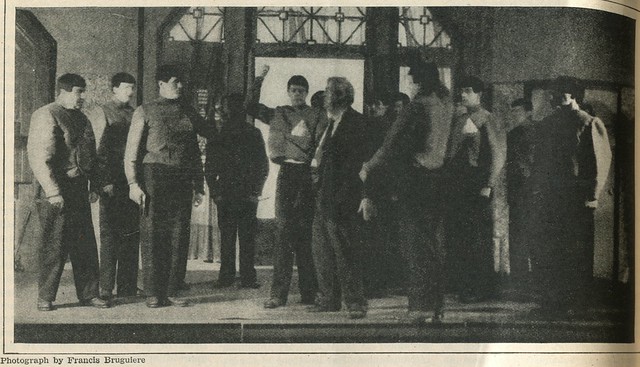
R.U.R.
"A Scene in "R.U.R.," a Theater Guild Production Now Playing at the Frazee Theater, New York City. The Robots have wiped out mankind with the exception of Louis Calvert, who they believed possessed the secret of manufacturing Robots. They spared his life in the hope that he might be able to teach them how to perpetuate their kind." from The Outlook vol. 132, December 13, 1922, p. 648. R.U.R. (Rossum's Universal Robots) is a play by the Czech author Karel Capek. Although Outlook was a mainstream magazine, the same image was reproduced in The Labor Age along with a discussion of the play. The Outlook's review: The Theater Guild opened its season with one of the most striking plays recently produced in New York--"R.U.R.," a drama from Czechoslovakia, by Capek. Its title stands for Rossum's Universal Robots, a chemically produced race of servants and laborers, created by Rossum and his successors with the purpose of eliminating the curse of Adam from the human race. These curious creatures, resembling men and women in almost everything but the power of emotional experience, are shipped out from the factory in thousands. They work, fight, and die for their masters in stolid submission. It is only when the sentimental wife of the factory manager persuades the chief chemist to labor to give these manikins souls that the Robots revolt. Led by a few of the super-manikins, they succeed in exterminating the human race save for a single man. The play, as its plot would indicate, is melodramatic in character, but it is a melodrama shot through with flashes of brilliant satire. The play is produced in a manner fully up to the best Theater Guild tradition. It is now playing at the Frazee Theater.
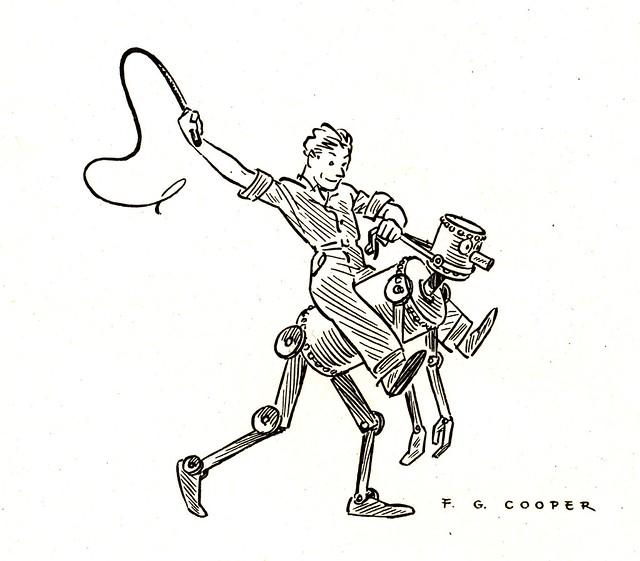
Riding the Machine
Illustration by F. G. Cooper, from William F. Ogburn, You and Machines (Chicago: University of Chicago Press, 1934). "It is Youth to whom we must look--not old men. They must learn to adjust themselves to the Machine. Perhaps they can see in advance what some of its effects will be. Our ancestors had the problem of adjusting themselves to snow and ice, to the sabre-toothed tiger and the woolly rhinoceros. The problem of the modern age is to adjust itself to a new monster, the Machine. Its habitat is not the forest, but the modern city. The future is in the hands of Youth." p. 52.
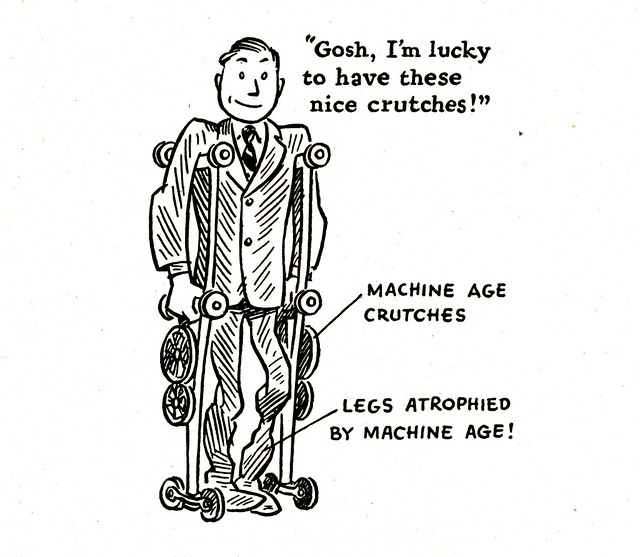
Machine Age Crutches
Illustration by F. G. Cooper, from William F. Ogburn, You and Machines (Chicago: University of Chicago Press, 1934).
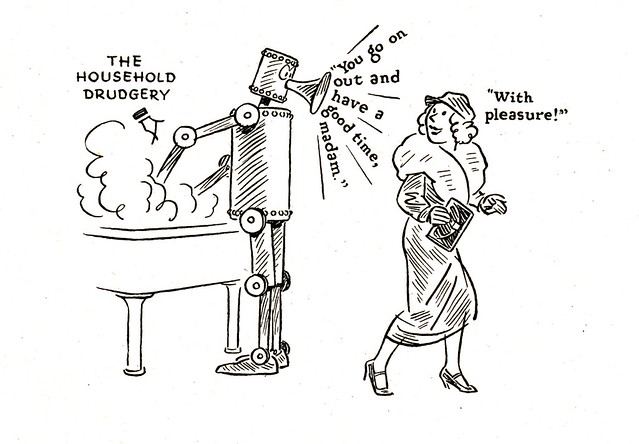
With Pleasure!
Illustration by F. G. Cooper, from William F. Ogburn, You and Machines (Chicago: University of Chicago Press, 1934).
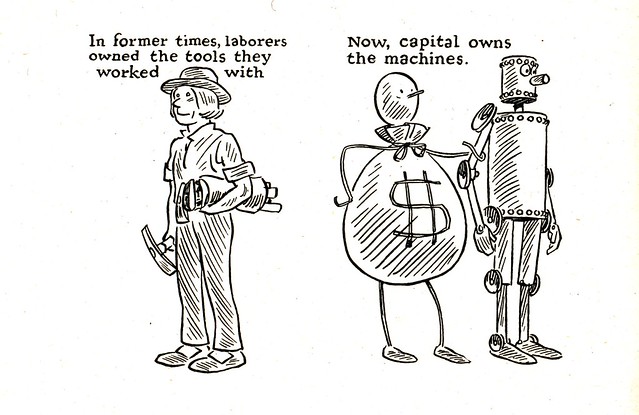
Old and New
Illustration by F. G. Cooper, from William F. Ogburn, You and Machines (Chicago: University of Chicago Press, 1934).
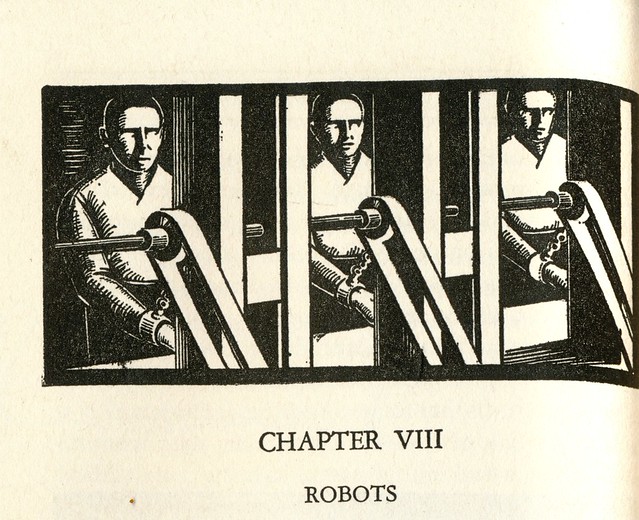
Robots
From Stuart Chase, Men and Machines (1929).
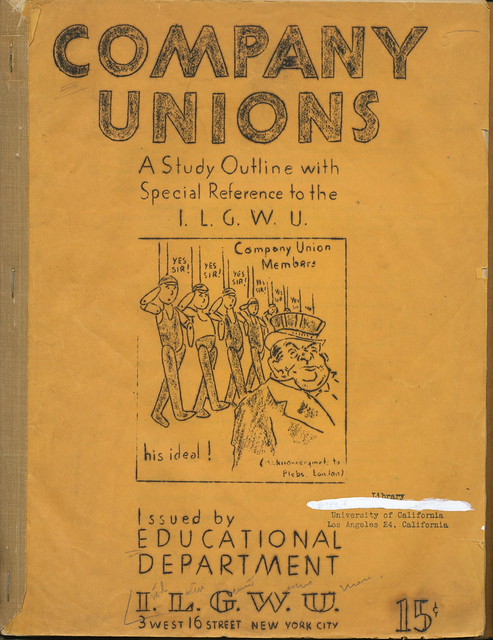
Company Unions
Company Unions: A Study Outline with Special Reference to the ILGWU.
No images match that search.